
Introduction
Early diagnosis of epilepsy in children is critical for preventing complications, improving developmental outcomes, and reducing anxiety for families. At the American Epilepsy Society (AES) annual meeting, researchers highlighted the success of a dedicated First Seizure Clinic (FSC) designed specifically for children who experience a seizure for the first time. This innovative clinic model significantly reduces the time between the first seizure event, neurological evaluation, and final diagnosis. The report shows that a streamlined pathway can transform pediatric epilepsy care and improve long-term results.
Why Early Diagnosis Matters
In pediatric patients, delays in diagnosing epilepsy often lead to:
Recurrent, uncontrolled seizures
School and behavioural difficulties
Delayed cognitive development
Family stress due to uncertainty
Missed opportunities for early treatment
Timely intervention allows clinicians to start appropriate therapies, determine seizure type, and manage risk factors swiftly. The First Seizure Clinic was created to address these gaps and offer rapid, coordinated care in a single structured pathway.
What Is a First Seizure Clinic?
A First Seizure Clinic is a specialized service designed to evaluate children within days or weeks after their first seizure.
Key features include:
Rapid appointments with pediatric neurologists
Immediate EEG and MRI scheduling
Assessment by epilepsy specialists
Education and counselling for families
Clear triage pathway from emergency departments and primary care
This clinic model ensures that no child “gets lost in the system” after experiencing a first seizure.
Study Overview at AES
The study presented at AES examined children who were referred to the First Seizure Clinic over a defined period. Researchers compared waiting times, diagnostic accuracy, and treatment timelines with traditional referral models.
Important metrics included:
Time from seizure to first neurological evaluation
Time to EEG and imaging
Percentage of patients diagnosed with epilepsy
Time to initiation of anti-seizure medication
Family satisfaction and educational support
The study demonstrated dramatic improvements across multiple aspects of care.
Key Findings
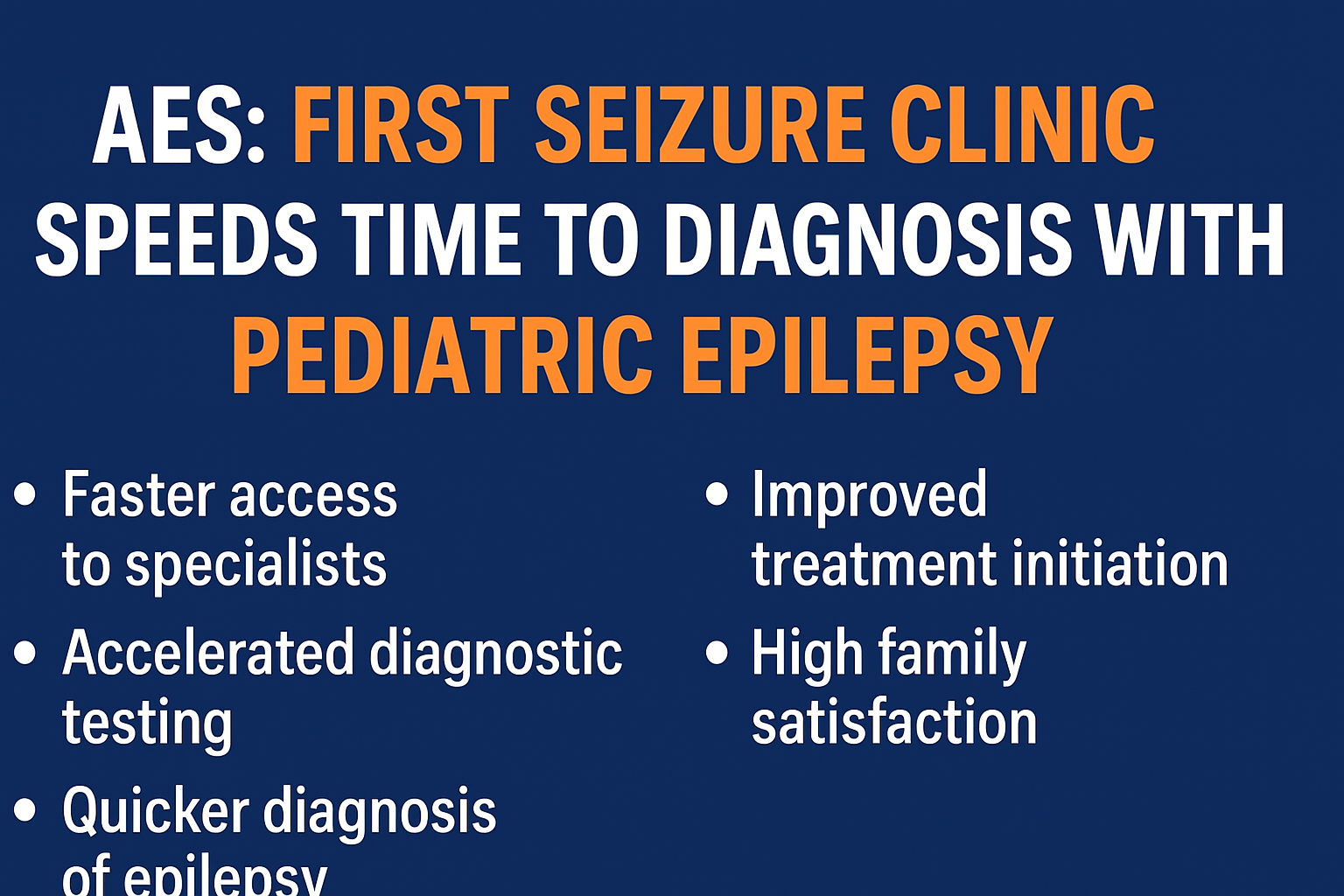
a. Faster Access to Specialists
Children were seen by a neurologist much sooner than in traditional systems, where wait times can stretch to weeks or months. The FSC reduced this significantly, often providing evaluation within 7–14 days.
b. Accelerated Diagnostic Testing
EEGs and MRIs were completed promptly, enabling clinicians to classify seizure type and assess risk of recurrence.
The clinic’s priority scheduling meant that most children completed tests within days, not weeks.
c. Quicker Diagnosis of Epilepsy
Thanks to rapid testing and specialist review, the time to a confirmed epilepsy diagnosis was cut sharply. Early diagnosis allowed:
Timely medication
Detailed counselling
Personalized seizure-management plans
d. Improved Treatment Initiation
Children who required anti-seizure medications received them earlier, reducing the likelihood of additional seizures while waiting for care.
e. High Family Satisfaction
Families reported reduced anxiety and uncertainty. Educational sessions helped parents understand:
What a seizure looks like
Safety measures
When to seek emergency care
Long-term outlook
Impact on Pediatric Healthcare
The FS Clinic model addresses major bottlenecks in pediatric neurology:
Long waiting lists
Fragmented referrals
Delayed testing
Lack of coordinated follow-up
By integrating all steps, the clinic improves outcomes and reduces the burden on emergency departments. It also helps identify children at high risk of future seizures, enabling early, targeted therapy.
Conclusion
The AES presentation shows that a First Seizure Clinic is a powerful and effective approach to pediatric epilepsy care. By providing rapid evaluation, timely diagnostic testing, and early treatment, the clinic significantly speeds up the entire care process. This model not only enhances clinical outcomes but also provides crucial support for families facing the fear and uncertainty of a child’s first seizure. As more hospitals adopt FSC programs, early epilepsy detection and management could become the new standard of care worldwide.