
Introduction
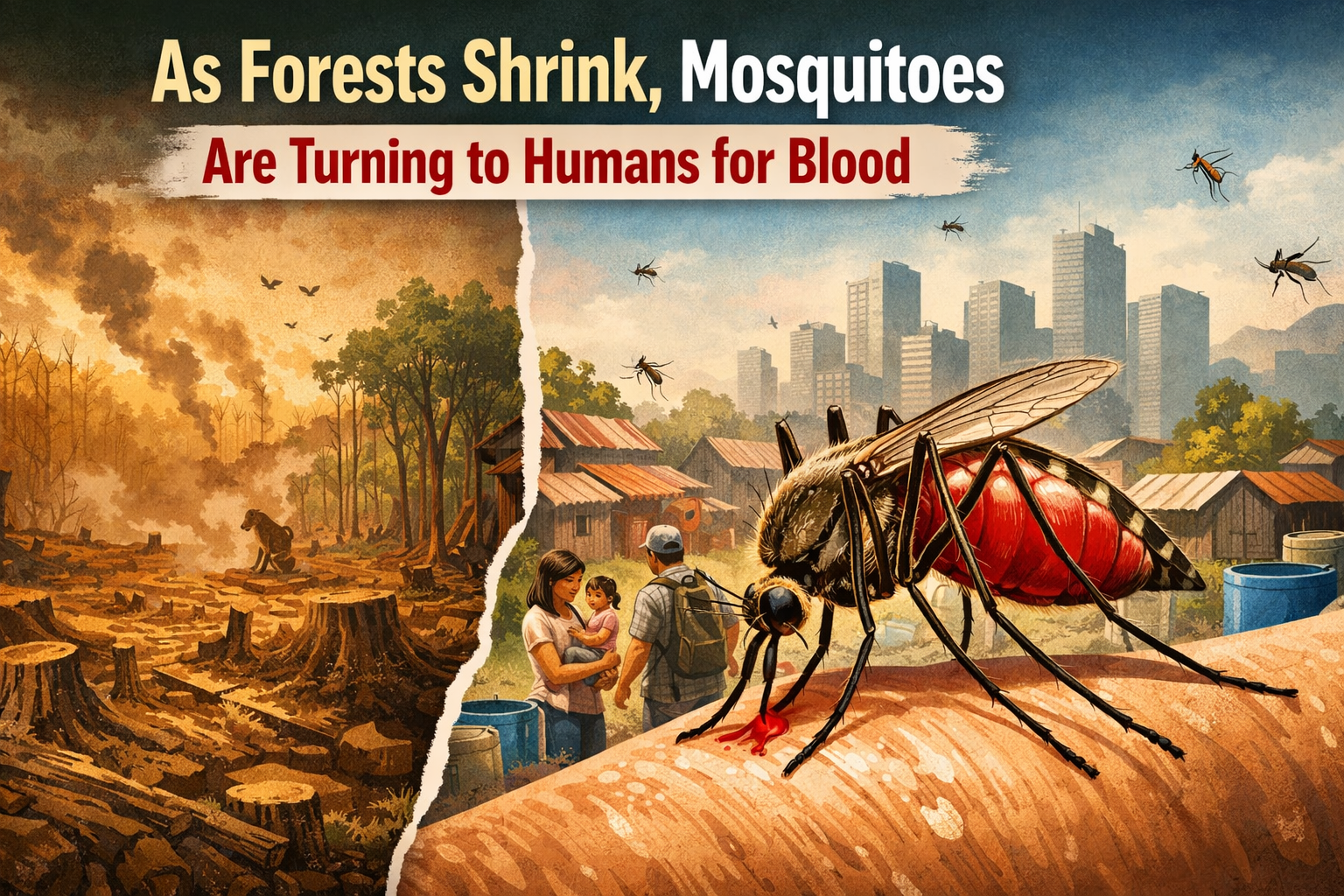
Deforestation is one of the most significant environmental changes caused by human activity. As forests are cleared for agriculture, urban expansion, and infrastructure development, wildlife habitats are disrupted. Among the many unintended consequences of this environmental shift is a growing change in mosquito behavior. Recent research shows that as forests shrink, mosquitoes that once fed on wild animals are increasingly turning to humans for blood. This shift has serious implications for public health and the spread of infectious diseases.
Loss of Natural Hosts
In healthy forest ecosystems, mosquitoes primarily feed on wild animals such as birds, deer, primates, and small mammals. These animals serve as natural blood hosts and help keep mosquito–human contact relatively low. However, deforestation reduces wildlife populations and fragments habitats, making it harder for mosquitoes to find their traditional hosts. As animals disappear or migrate deeper into remaining forest patches, mosquitoes are forced to seek alternative blood sources—most often nearby human populations.
Human Encroachment into Forest Areas
As forests shrink, humans increasingly live and work closer to forest edges. Roads, farms, and settlements push into once-undisturbed areas, bringing people into direct contact with mosquito habitats. Standing water from construction sites, irrigation systems, and poorly managed waste creates ideal breeding grounds for mosquitoes. With humans now readily available and abundant, mosquitoes adapt quickly to feeding on people rather than animals.
Behavioral Adaptation of Mosquitoes
Mosquitoes are highly adaptable insects. Some species are capable of changing their feeding preferences within just a few generations. Studies have shown that mosquitoes exposed to human-dominated environments become more attracted to human scent, body heat, and carbon dioxide. Over time, this behavioral shift can become genetically reinforced, leading to mosquito populations that preferentially target humans even when animal hosts are present.
Increased Risk of Disease Transmission
The growing reliance of mosquitoes on human blood significantly increases the risk of mosquito-borne diseases. When mosquitoes bite humans more frequently, pathogens such as malaria parasites, dengue virus, Zika virus, chikungunya, and yellow fever can spread more efficiently. In forest-edge communities, outbreaks of these diseases are becoming more common, especially in tropical and subtropical regions where deforestation is rapid.
Impact on Rural and Indigenous Communities
Rural and Indigenous communities living near forests are often the most affected by these changes. These populations may have limited access to healthcare, mosquito control measures, and disease prevention resources. As mosquitoes shift their feeding habits, these communities face higher exposure to bites and a greater risk of illness, compounding existing social and economic challenges.
Conclusion
The shift of mosquitoes from animal hosts to humans is a clear example of how environmental destruction can directly impact human health. As forests shrink, mosquitoes adapt in ways that increase disease risks for people. Protecting forests is not only an environmental priority but also a crucial public health strategy. By preserving natural ecosystems, societies can help reduce mosquito-human contact and prevent the spread of dangerous mosquito-borne diseases.