overview
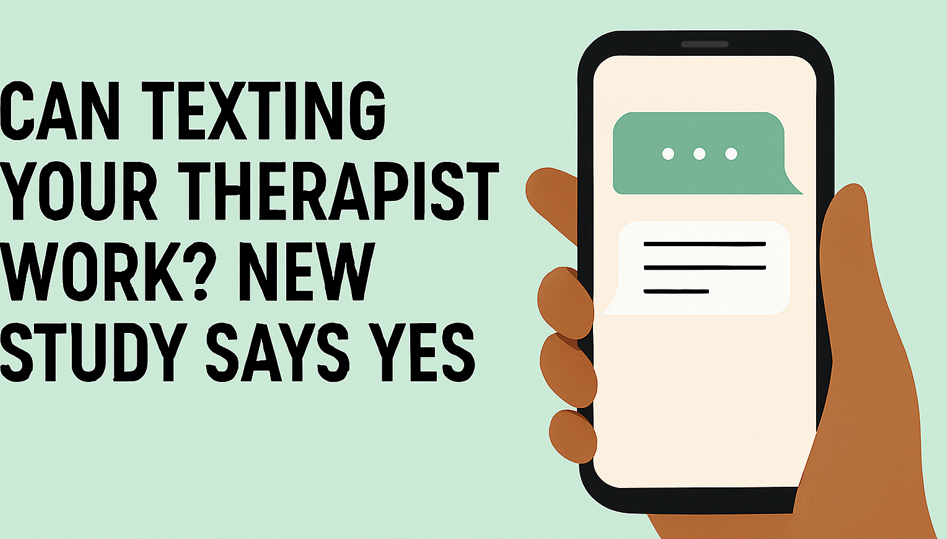
As mental health services evolve, a growing body of research suggests that text-based therapy—where communication happens via text messages rather than (or in addition to) live video or in-person sessions—may be a viable and effective option for many people. A recent large-scale clinical trial found that for those with mild to moderate depression, unlimited messaging with a licensed therapist over 12 weeks produced results very similar to weekly video-therapy.
What the new study found
In the study published in *JAMA Network Open, 850 adults with mild to moderate depression were randomly assigned to either (1) weekly video-based therapy or (2) unlimited messaging with a licensed therapist for 12 weeks. By the end of the trial, both groups reported similar improvements in depressive symptoms. One of the study’s co-authors noted: “We were pleasantly surprised to see that it was as good as weekly video therapy.” The messaging group also had lower dropout rates, suggesting that the convenience and flexibility of text-based therapy may foster greater engagement. Importantly, the study excluded people with severe mental-health conditions such as psychosis or active suicidal ideation, so its findings apply primarily to mild-to-moderate cases.
Why it might work
There are several reasons why texting a therapist could be effective:
Accessibility & convenience: Many find it hard to attend scheduled video or in-person sessions due to time, transportation, cost or other constraints. Texting allows asynchronous communication, which can fit into daily life more easily. The trial noted this as a benefit for people who “struggle to attend traditional or virtual appointments.”
Greater engagement: Because messaging is flexible, clients might feel more comfortable reaching out when issues arise rather than waiting for a scheduled session. That immediacy can help catch problems earlier and keep momentum.
What limitations and caveats exist
However, texting therapy is not without caveats and it may not be a full substitute for traditional care in all cases. Some limitations include:
Therapeutic alliance: The same study found that although outcomes were similar, patients in the video group rated their therapist as slightly warmer and more compassionate, suggesting that non-verbal cues and real-time interaction may still matter for some clients.
Severity of condition: The evidence so far applies mainly to mild-to-moderate depression. For more complex or severe conditions (e.g., psychosis, high suicide risk, complex trauma) there is not yet enough evidence that text-only therapy is sufficient. The trial’s authors stressed that texting therapy “may not be appropriate for everyone.”
Building rapport & communication nuances: Some survey data show that users are less confident that text-based therapy is as effective as face-to-face treatment. For example, among graduate students surveyed, only ~5% believed text therapy was “very effective,” compared to ~64% for in-person therapy.
Privacy, boundaries & emergencies: As with all remote formats, issues around confidentiality, response times, and managing crises (which may require immediate live contact) must be carefully handled.
Where texting therapy might fit
Given the above, texting with a therapist could be especially useful as part of a “stepped-care” model—where lower-intensity care (messaging) is offered first for mild symptoms, and more intensive therapy (video, in-person) is reserved for higher complexity. Experts quoted in the study suggest this model. It also may be particularly helpful for people in underserved areas, or with busy schedules, or who prefer texting due to anxiety, mobility issues or other constraints.