overview
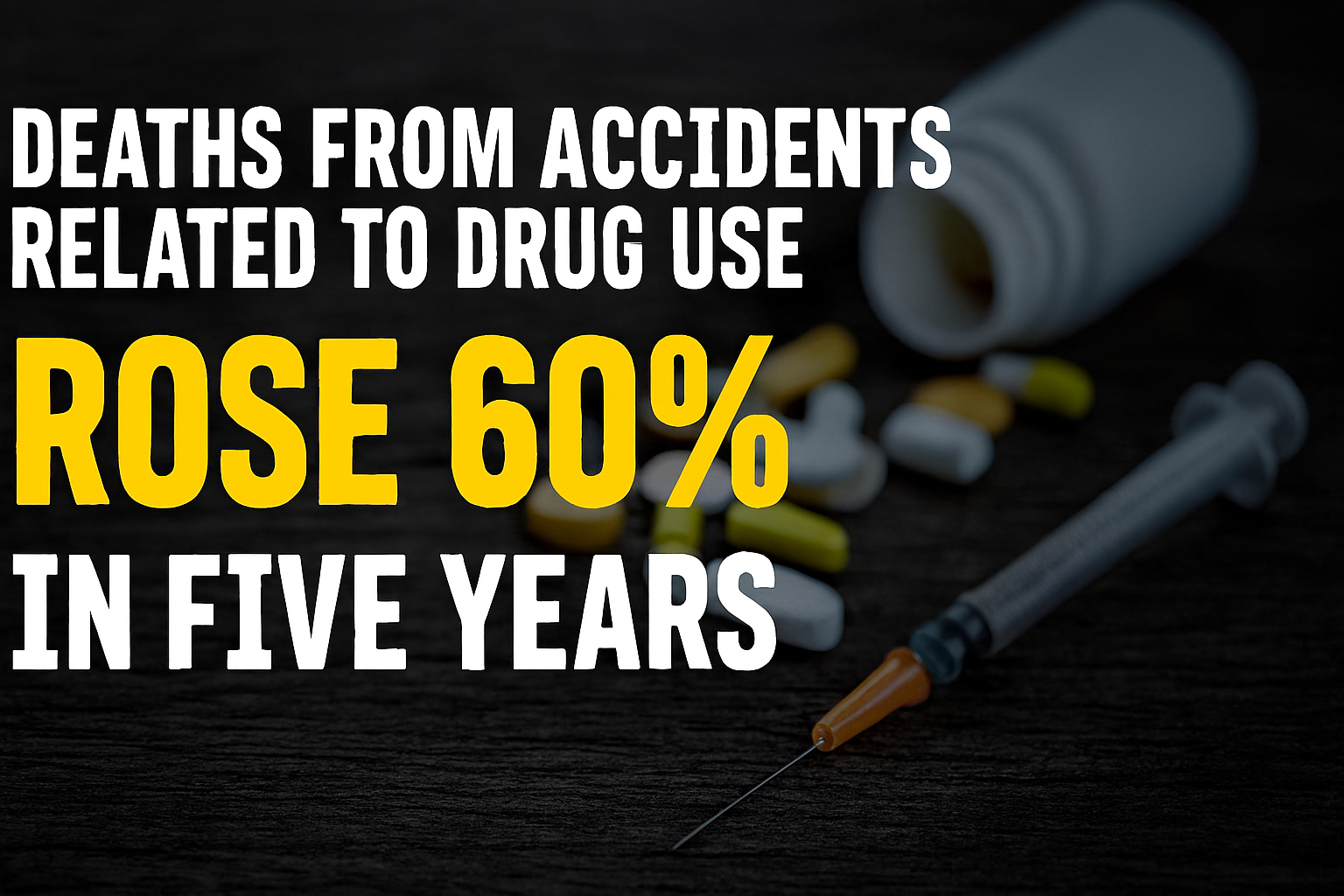
Over the past five years, the world has seen a concerning rise in drug-related accidental deaths. According to new health statistics and research reports, fatalities linked to drug misuse, overdoses, and accidental poisonings have surged by almost 60%, raising serious public health alarms. This sharp increase not only reflects the growing prevalence of substance abuse but also highlights the urgent need for better education, prevention, and support systems to combat addiction and its consequences.
Rising Trends in Drug-Related Accidents
Experts attribute the 60% rise to multiple overlapping factors, including the increased availability of synthetic drugs, prescription misuse, and the mixing of multiple substances such as opioids and alcohol. In many cases, these incidents were not intentional overdoses but accidents resulting from improper use or dangerous combinations of drugs.
Synthetic opioids like fentanyl and its analogues have been a major contributor. Even tiny doses of fentanyl can be deadly, and it is frequently found mixed with other drugs without the user’s knowledge. Similarly, accidental overdoses involving prescription painkillers and sedatives have also escalated as more individuals turn to these substances for self-medication or recreational purposes.
Demographic Impact and Affected Groups
While drug-related deaths affect people of all ages, certain groups have been hit harder. Young adults aged 18–35 years represent the largest portion of the increase. This demographic is particularly vulnerable due to peer pressure, social experimentation, and mental health struggles such as anxiety and depression.
Additionally, middle-aged adults dealing with chronic pain or economic stress have shown a sharp rise in accidental overdoses linked to prescription medications. In rural areas, where access to addiction treatment and mental health support is limited, the death rate has risen more steeply than in urban regions.
COVID-19 and Its Lingering Effects
The COVID-19 pandemic accelerated substance misuse trends. Social isolation, job losses, and the closure of rehabilitation centers left many without proper support. Lockdowns disrupted drug supply chains, leading users to turn to unregulated street drugs with unpredictable potency. As a result, accidental overdoses surged dramatically during and after the pandemic period.
Furthermore, the stress and uncertainty surrounding the pandemic triggered mental health crises for millions, pushing some individuals toward increased drug use as a coping mechanism. The consequences of that period continue to reverberate, with overdose-related deaths still higher than pre-pandemic levels.
Government and Healthcare Response
Public health authorities have recognized the urgency of the situation. Many governments have launched awareness campaigns focused on safe drug use, overdose prevention, and treatment options. Programs distributing naloxone—a life-saving medication that reverses opioid overdoses—have expanded in several countries.
However, experts argue that these measures, while important, are not enough. There is a growing call for holistic addiction treatment, combining mental health counseling, social support, and medical care. Policymakers are being urged to address the root causes of substance abuse, such as unemployment, trauma, and lack of access to healthcare.
The Role of Education and Prevention
Education plays a key role in reversing the rising death toll. Schools, communities, and workplaces must promote awareness about the dangers of drug misuse, emphasizing safe prescription practices and early intervention. Families also need to be equipped to recognize early warning signs of substance dependency.
Digital health platforms and telemedicine have shown promise in reaching people who might not seek in-person help. Early intervention through online counseling and rehabilitation programs can help reduce risks before they lead to tragedy.
Conclusion
The 60% rise in deaths from drug-related accidents over five years is a stark reminder that substance misuse remains a major global health crisis. It is not merely a matter of illegal drug use; prescription misuse, mental health challenges, and societal stress all play critical roles.
To reverse this trend, a comprehensive approach is required—one that combines education, prevention, accessible treatment, and compassionate community support. Only through sustained, coordinated efforts can societies hope to curb accidental drug-related deaths and give individuals the tools they need to live healthier, safer lives.