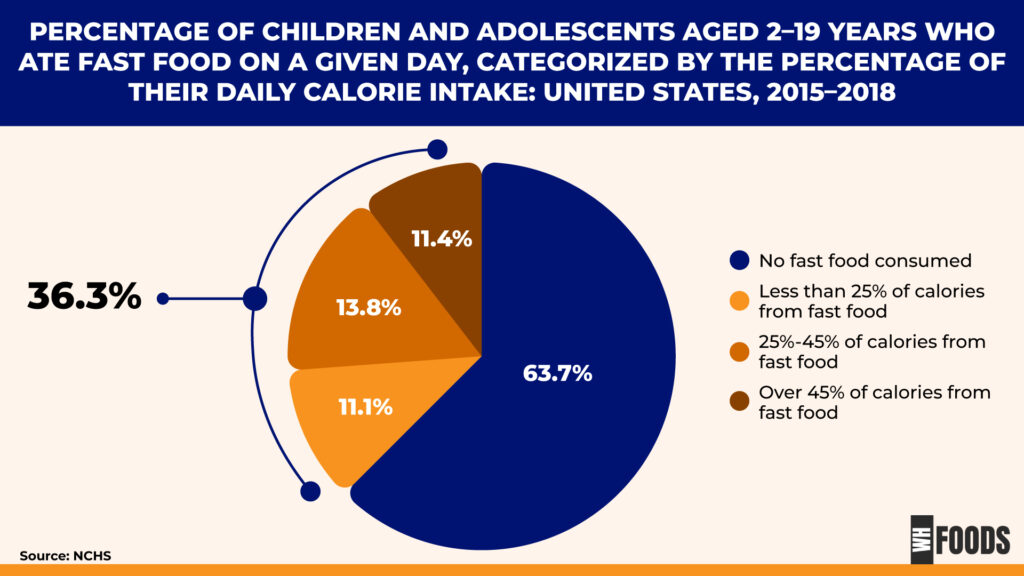
Calorie Intake from Fast Food
While 32% of adults consumed fast food, the average percentage of daily calories derived from these meals was 11.7%, a notable decline from 14.1% in 2013–2014.This shift suggests that although fast-food consumption remains prevalent, individuals may be choosing smaller portions, lower-calorie options, or consuming it less frequently.
Age Variations
Calorie intake from fast food decreases with age:
20–39 years: 15.2% of daily calories
40–59 years: 11.9%
60+ years: 7.6% medicalxpress.com+8cdc.gov+8primarynewssource.org+8
Younger adults, particularly those aged 20–39, consume a significantly higher proportion of their daily calories from fast food, underscoring the ongoing influence of convenience and lifestyle in this age group.
Trends Over Time
The shift from 14.1% in 2013–2014 to 11.7% in 2021–2023 shows a statistically significant downward trend in fast-food caloric intake . Among the youngest age group (20–39), consumption dropped notably, from 19% to 15.2%—a nearly 20% relative decrease .
While this indicates progress, the ongoing high consumption rates highlight the persistent role of fast food in American diets.
Conclusion
Despite a modest decrease in fast-food calorie share since 2013–2014, a substantial portion of U.S. adults—especially younger individuals and those with obesity—still rely heavily on fast food. This dietary pattern poses ongoing challenges for public health, notably regarding chronic disease risk and nutrition quality. These findings emphasize the need for policy and community strategies emphasizing healthier options, portion control, and nutritional awareness—particularly in groups with higher consumption rates.