Mechanism of Action
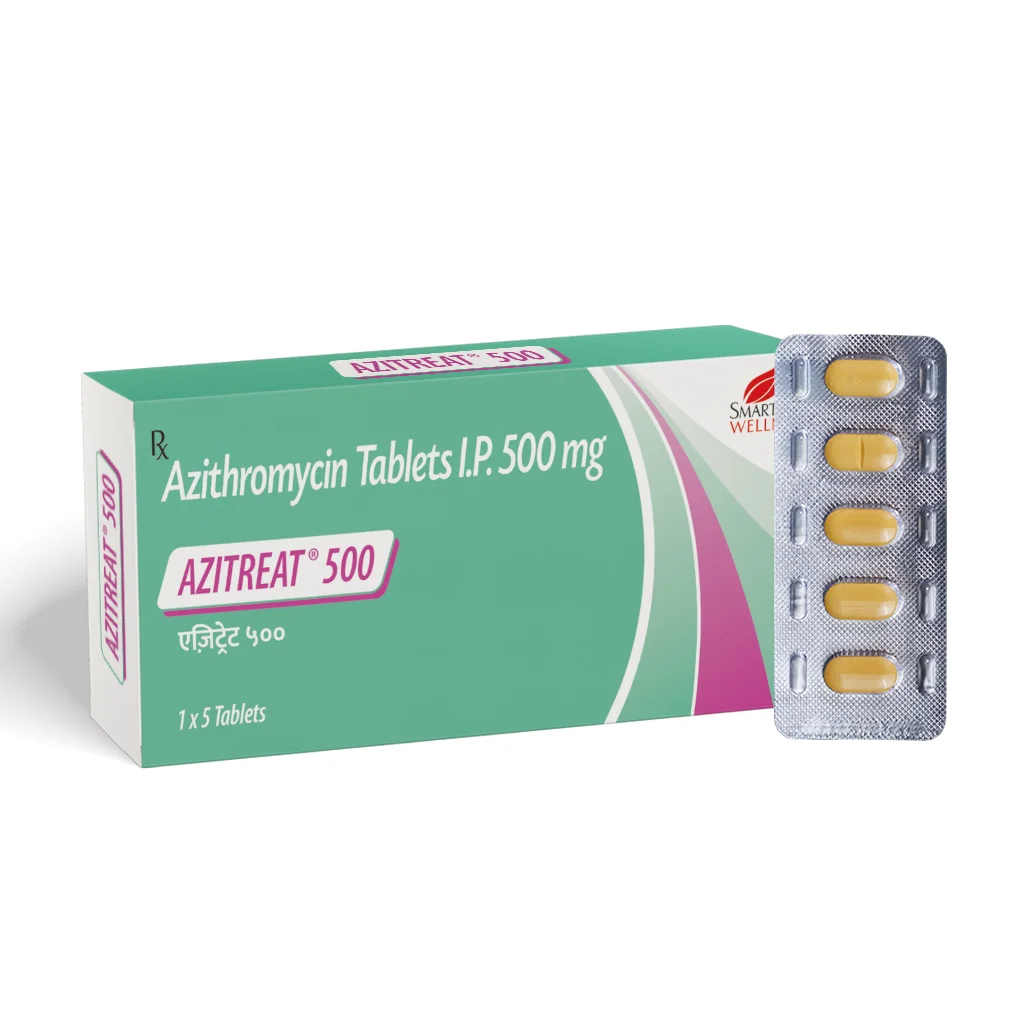
Azithromycin works by inhibiting bacterial protein synthesis. It binds to the 50S ribosomal subunit of susceptible bacteria, thereby preventing the translation of mRNA into essential proteins. This action halts bacterial growth and replication, effectively treating the infection. While it is bacteriostatic (inhibits growth), it can be bactericidal (kills bacteria) at higher concentrations or against highly susceptible organisms.
Indications and Uses
The Azithromycin is used to treat a wide range of bacterial infections, including:
Respiratory tract infections: such as bronchitis, pneumonia, sinusitis, and pharyngitis.
Ear infections: especially otitis media in children.
Skin and soft tissue infections
Sexually transmitted infections (STIs): such as chlamydia and gonorrhea.
Urethritis and cervicitis
Traveler’s diarrhea
Mycobacterium avium complex (MAC): especially in HIV/AIDS patients.
It is particularly valued for treating atypical pathogens like Mycoplasma pneumoniae, Chlamydia trachomatis, and Legionella pneumophila that are not susceptible to many other antibiotics.
Dosage and Administration
Yes, Azithromycin dosing varies depending on the infection:
For respiratory or skin infections, the typical adult dose is 500 mg on day 1, followed by 250 mg once daily for 4 more days (commonly known as a “Z-Pak”).
For chlamydia, a single 1 gram (1000 mg) dose is standard.
For more serious infections or alternative conditions, intravenous azithromycin may be used under medical supervision.
Azithromycin has a long half-life, allowing once-daily dosing and short treatment courses, which improves patient compliance.
It can be taken with or without food, although taking it with food may reduce gastrointestinal discomfort.
Side Effects
Effectively Azithromycin is generally well-tolerated, but like all medications, it may cause side effects. Common side effects include:
Nausea
Diarrhea
Abdominal pain
Vomiting
Less common but more serious side effects may include:
Allergic reactions (rash, itching, anaphylaxis)
Liver enzyme elevation or hepatitis
Irregular heartbeat (QT prolongation, especially in patients with heart problems)
Clostridioides difficile-associated diarrhea
If any severe reaction occurs, medical help should be sought immediately.
Our Products
-
Metformin 500mg
$0.80 / Per Pill
-
Fenbendazole 500mg
$3.00 / Per Pill
-
Hydroxychloroquine 400MG
$1.50 / Per Pill