Introduction
Glaucoma is a leading cause of irreversible blindness worldwide, primarily caused by damage to the optic nerve. Elevated intraocular pressure (IOP) is one of the most significant risk factors for glaucoma progression. While medications and surgical treatments are commonly used to manage IOP, recent research suggests that sleeping posture—particularly high pillow position—may influence eye pressure during sleep, potentially affecting glaucoma outcomes.
Understanding Intraocular Pressure and Glaucoma
Intraocular pressure refers to the fluid pressure inside the eye, maintained by a balance between the production and drainage of aqueous humor. When this balance is disrupted, pressure builds up and can damage the optic nerve. In glaucoma patients, even small increases in IOP—especially over long periods—can accelerate vision loss. Notably, IOP naturally fluctuates throughout the day and often rises during nighttime sleep.
The Role of Sleep Position in Eye Pressure
Body and head position have been shown to affect blood flow and fluid dynamics in the eye. When a person lies down, changes in venous pressure and fluid redistribution can lead to increased IOP. Researchers have found that certain sleep positions—such as side sleeping, prone sleeping, and elevated head positioning—may further influence these pressure changes.

High Pillow Position and Increased IOP
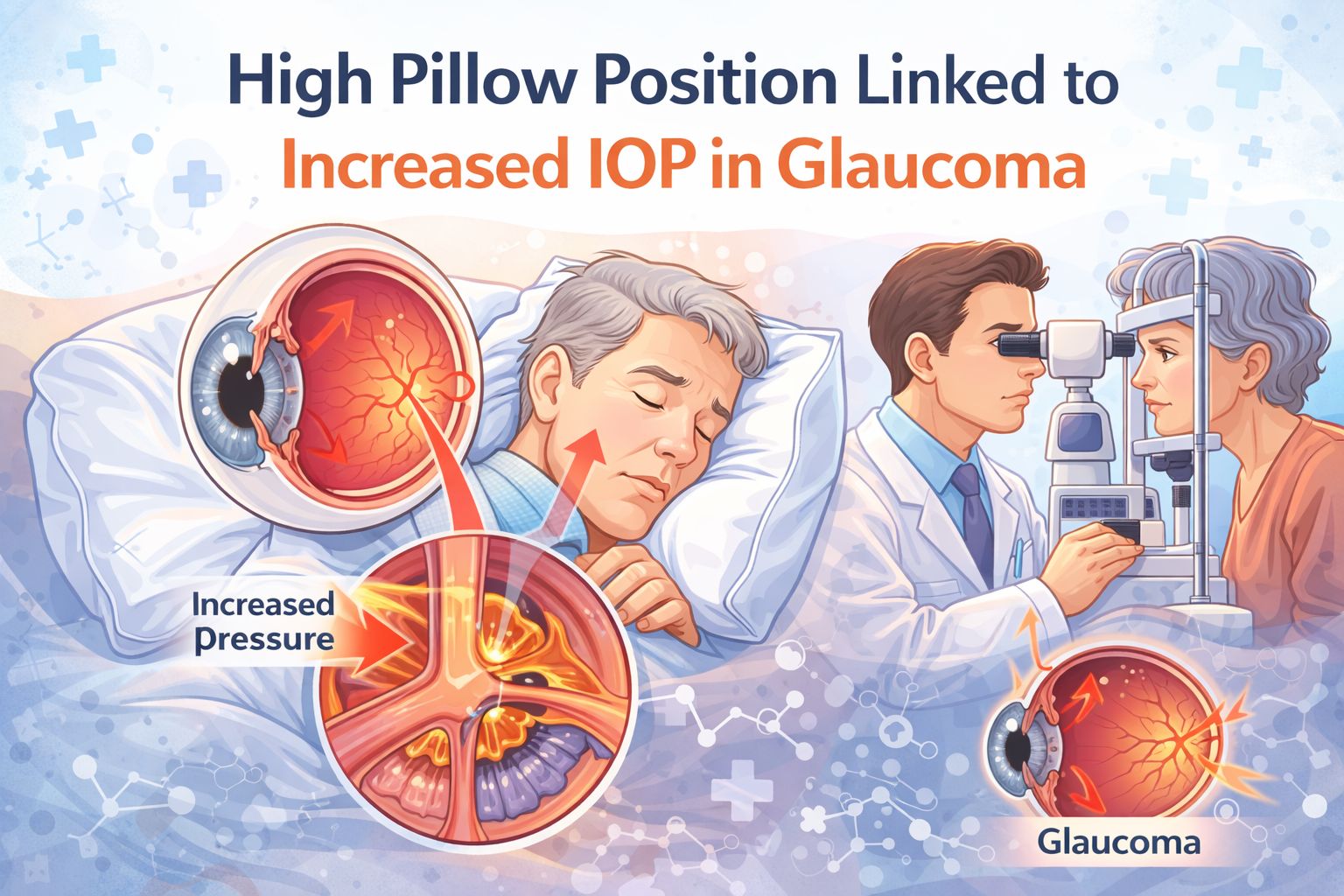
Recent studies indicate that using a high pillow, which significantly elevates the head and neck, may paradoxically increase intraocular pressure in glaucoma patients. While elevation is often assumed to improve circulation, excessive pillow height can compress neck veins and alter venous drainage from the eyes. This may result in increased episcleral venous pressure, leading to higher IOP during sleep.
Why Nighttime IOP Matters
Nighttime IOP elevation is particularly concerning because glaucoma damage often progresses silently during sleep. Patients are unaware of these pressure changes, and standard clinic measurements typically occur during daytime hours. If a high pillow position consistently raises IOP overnight, it could contribute to optic nerve damage despite well-controlled daytime readings.
Who Is Most at Risk?
Patients with moderate to advanced glaucoma, normal-tension glaucoma, or asymmetric disease (worse in one eye) may be especially vulnerable to posture-related IOP changes. Side sleepers may experience higher pressure in the eye closest to the pillow. Combined with a high pillow, this could further increase risk. Individuals with sleep apnea or vascular conditions may also experience compounded effects.
Conclusion
Emerging research suggests that high pillow positioning during sleep may increase intraocular pressure in glaucoma patients, potentially contributing to disease progression. As glaucoma management evolves, attention to sleep posture and nighttime IOP control is becoming increasingly important. Simple adjustments to sleeping habits—alongside medical care—may offer additional protection for long-term vision health.