Introduction
Cardiovascular disease (CVD) remains the leading cause of death globally, driven by factors such as physical inactivity, stress, air pollution, and unhealthy lifestyles. In recent years, researchers have increasingly explored the role of greenspace—areas with vegetation such as parks, forests, and gardens—in promoting heart health. New evidence suggests that while greenspace can reduce CVD risk, the health benefits vary depending on the type and quality of greenspace available.
Understanding Greenspace and Cardiovascular Health
Greenspace generally refers to natural or semi-natural outdoor environments that include trees, grass, and other vegetation. These environments influence cardiovascular health through multiple pathways, including improved air quality, increased physical activity, stress reduction, and enhanced social interaction. However, not all greenspaces offer the same level of benefit, and their impact depends on accessibility, design, and function.
Parks and Recreational Greenspaces
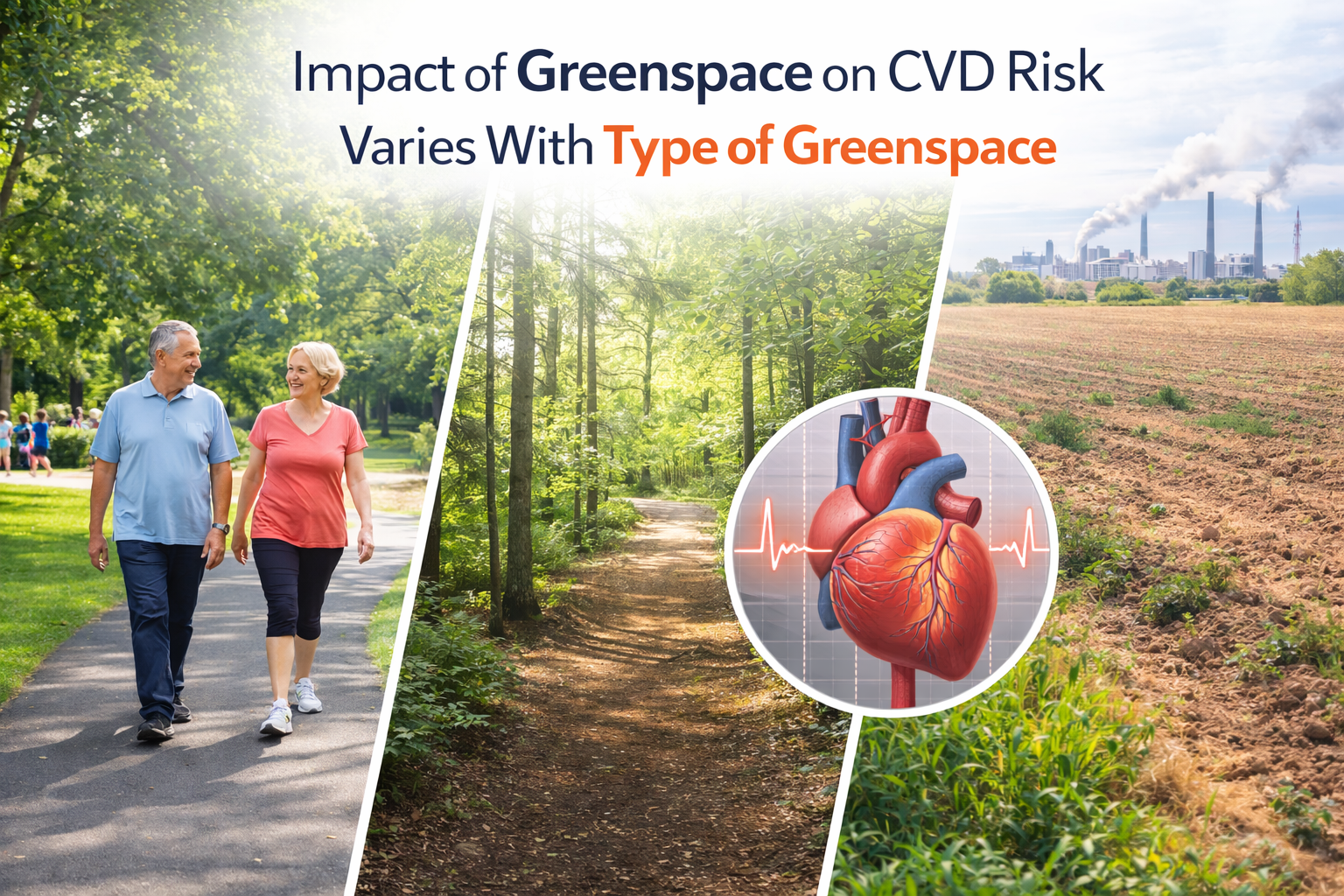
Public parks and recreational greenspaces are among the most beneficial for cardiovascular health. These areas often provide walking paths, open fields, and exercise facilities that encourage physical activity. Regular movement—such as walking, jogging, or cycling—is a well-established protective factor against heart disease. Studies show that individuals living near well-maintained parks tend to have lower blood pressure, healthier body weight, and reduced risk of heart attacks.
Urban Green Infrastructure
Urban green infrastructure, including street trees, green corridors, and landscaped sidewalks, also plays a significant role in reducing CVD risk. These forms of greenspace help lower air pollution levels and reduce urban heat, both of which are linked to cardiovascular stress. Tree-lined streets have been associated with improved heart health by promoting active transportation and decreasing exposure to harmful pollutants.
Forests and Natural Landscapes
Forests and larger natural areas offer unique cardiovascular benefits through stress reduction and mental restoration. Exposure to natural environments has been shown to lower cortisol levels, reduce heart rate, and improve autonomic nervous system balance. While forests may not always support structured physical activity, their calming effects contribute indirectly to improved cardiovascular outcomes.
Agricultural and Non-Recreational Greenspaces
Not all greenspaces are equally beneficial. Agricultural land, undeveloped fields, or inaccessible green areas may provide limited cardiovascular advantages. While these spaces may improve air quality or biodiversity, they often lack opportunities for physical activity or social engagement. As a result, their direct impact on reducing CVD risk is generally weaker compared to recreational or urban greenspaces.
Implications for Urban Planning and Public Health
Understanding that different types of greenspace offer varying cardiovascular benefits has important implications for urban planning. Policymakers and city planners can prioritize the development of accessible parks, tree-lined streets, and multifunctional green areas. Integrating health-focused greenspace design into cities may be a cost-effective strategy for reducing CVD burden at the population level.
Conclusion
Greenspace plays a vital role in cardiovascular health, but its impact is not uniform. The type, accessibility, and quality of greenspace significantly influence its ability to reduce CVD risk. Parks and urban green infrastructure offer the strongest benefits, while non-recreational greenspaces provide more limited protection. Strategic investment in diverse, accessible, and well-designed greenspaces can support healthier hearts and more resilient communities.
Our Products
-
Gabapentin 400mg
$1.00 / Per Pill

-
Gabapentin 300mg
$1.00 / Per Pill
-
Fenbendazole 500mg
$3.00 / Per Pill