
Introduction
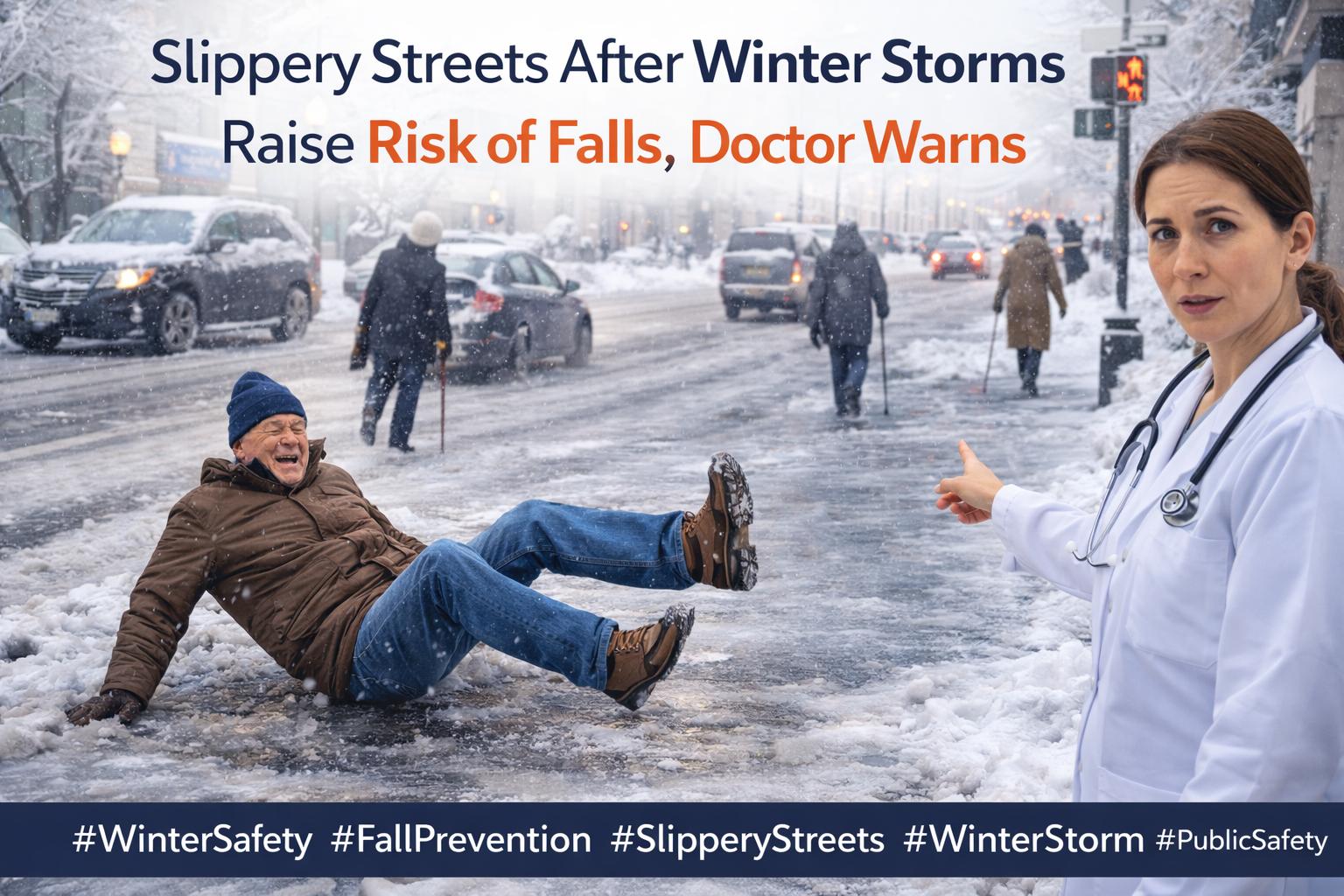
Winter storms often leave behind more than just cold temperatures—they create dangerous conditions on roads and sidewalks that significantly increase the risk of slips and falls. Medical professionals are warning that slippery streets after winter storms pose a serious injury risk, especially for older adults, children, and people with mobility issues. Falls during icy conditions can lead to fractures, head injuries, and long-term complications, making prevention and awareness essential.
Why Winter Storms Increase Fall Risk
After a winter storm, melting snow can refreeze overnight, forming invisible patches of ice known as “black ice.” These slick surfaces are difficult to detect and can cause sudden loss of balance. Snow-packed sidewalks, untreated roads, and wet surfaces further increase the likelihood of falls. According to doctors, even healthy individuals can be caught off guard when walking on icy ground.
Common Injuries From Winter Falls
Falls on slippery streets can result in a range of injuries. The most common include wrist and arm fractures, ankle sprains, hip fractures, and head injuries. Older adults are particularly vulnerable to hip and spine injuries, which may require surgery and lengthy rehabilitation. Doctors emphasize that head injuries from falls—especially when no helmet or protection is worn—can be life-threatening and should never be ignored.
Who Is Most at Risk
Certain groups face a higher risk of injury during post-storm conditions. Older adults, people with osteoporosis, individuals with vision problems, and those with balance disorders are more likely to fall. Children walking to school and workers commuting early in the morning, when ice is less visible, are also at increased risk. People rushing or distracted by phones are especially vulnerable on slippery surfaces.
Medical Advice on Preventing Falls
Doctors recommend several practical steps to reduce fall risk after winter storms. Wearing shoes with good traction or slip-resistant soles can significantly improve stability. Walking slowly, taking smaller steps, and keeping hands free for balance are also advised. If sidewalks appear icy, using handrails, walking on snow rather than ice, or choosing well-treated paths can help reduce danger.
Role of Communities and Local Authorities
Local governments and communities play a crucial role in preventing injuries. Prompt snow removal, salting of sidewalks, and clearing pedestrian crossings can reduce hazards. Doctors encourage residents to report dangerous areas and property owners to clear walkways promptly. Community awareness campaigns can also help educate the public about winter safety.
What to Do After a Fall
If someone falls, doctors advise assessing injuries carefully before moving. Severe pain, inability to stand, dizziness, or head impact are signs that immediate medical attention is needed. Even minor falls should be monitored, as symptoms like swelling or pain can worsen hours later. Older adults should seek medical advice after any significant fall, even if injuries seem minor.
Conclusion
Slippery streets after winter storms pose a serious but preventable health risk. Doctors warn that increased caution, proper footwear, and community preparedness can significantly reduce fall-related injuries. By staying alert and taking simple safety measures, individuals can protect themselves and others during hazardous winter conditions. Preventing falls not only avoids injuries but also reduces strain on healthcare systems during the busy winter season.