Understanding Norovirus
Norovirus is a highly contagious virus and one of the leading causes of acute gastroenteritis worldwide. It affects people of all ages and spreads rapidly in communities, schools, healthcare facilities, cruise ships, and households. The virus causes inflammation of the stomach and intestines, leading to symptoms such as nausea, vomiting, diarrhea, and stomach cramps. Because norovirus can survive on surfaces for long periods and requires only a small number of viral particles to cause infection, outbreaks are common and difficult to control.
How Norovirus Spreads
Norovirus spreads primarily through the fecal-oral route. This can happen by consuming contaminated food or water, touching contaminated surfaces, or having close contact with an infected person. The virus can also spread through tiny droplets released when an infected person vomits. Food handlers who are infected can easily transmit the virus if proper hygiene is not followed. Notably, norovirus can survive freezing, heating, and many common disinfectants, making prevention especially challenging.
Common Signs and Symptoms
Symptoms of norovirus infection usually appear 12 to 48 hours after exposure. The most common signs include sudden onset of vomiting, watery diarrhea, nausea, and abdominal pain. Some people may also experience fever, headache, muscle aches, and fatigue. While symptoms typically last one to three days, infected individuals can remain contagious for several days after recovery. Dehydration is the most serious complication, particularly in young children, older adults, and individuals with weakened immune systems.

Preventing Norovirus Infection
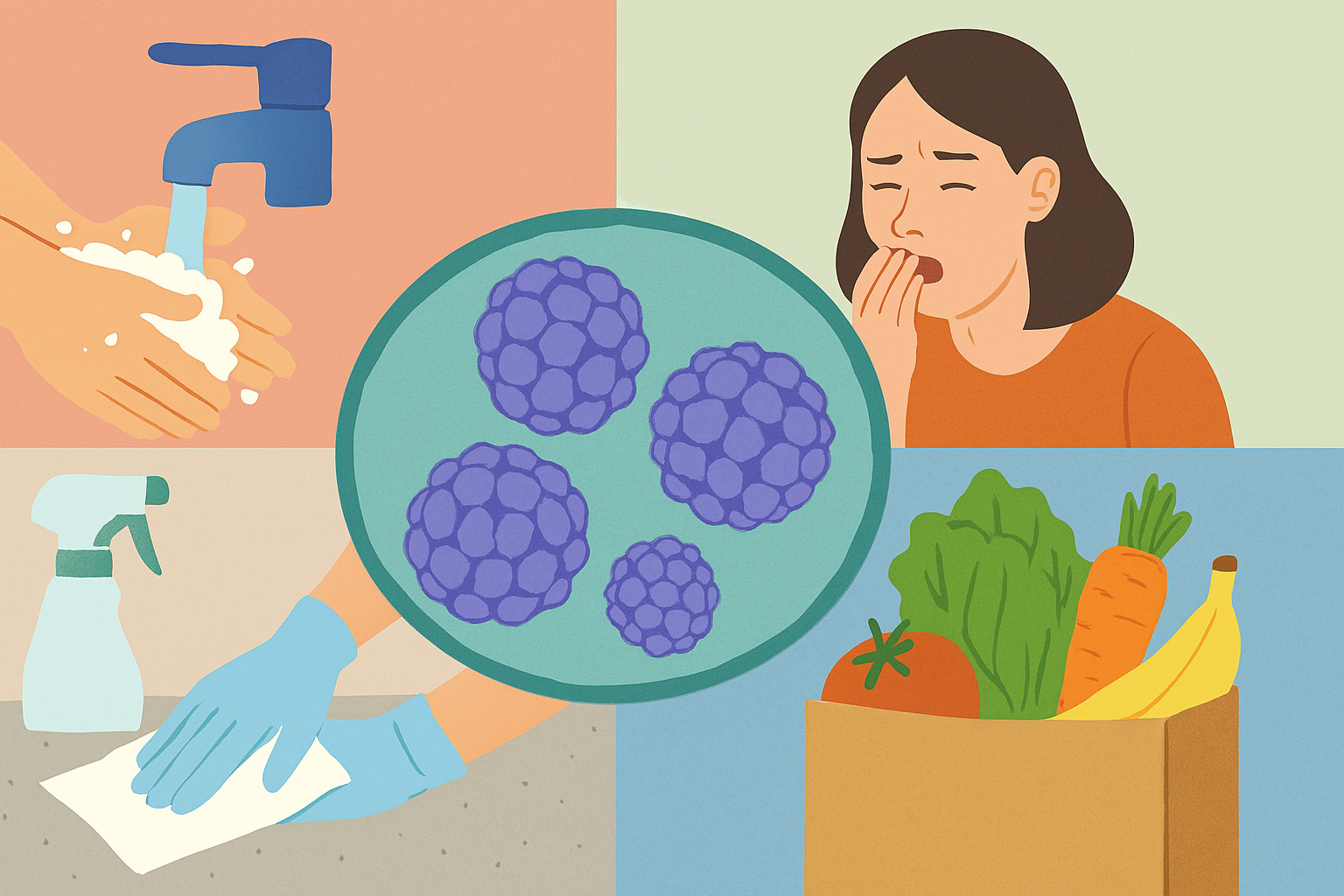
Prevention is the most effective way to fight norovirus. Proper hand hygiene is crucial—washing hands thoroughly with soap and water is far more effective than using alcohol-based hand sanitizers against norovirus. Food safety practices, such as washing fruits and vegetables, cooking seafood thoroughly, and avoiding food preparation when sick, are essential. Regularly cleaning and disinfecting high-touch surfaces using chlorine-based disinfectants can significantly reduce the risk of transmission.
What to Do If You Are Infected
If you or someone in your household becomes infected, isolation and hygiene are key. Stay home from work, school, or public places until at least 48 hours after symptoms stop. Drink plenty of fluids such as water, oral rehydration solutions, and clear broths to prevent dehydration. Avoid sugary, caffeinated, or alcoholic beverages, as they can worsen dehydration. Rest is important, and light foods can be reintroduced gradually as symptoms improve.
Cleaning and Disinfection During an Outbreak
Proper cleaning is critical to stopping the spread of norovirus. Immediately clean and disinfect areas contaminated by vomit or diarrhea, using gloves and disposable cleaning materials. Wash contaminated clothing and linens separately using hot water and detergent. Dispose of cleaning materials carefully and wash hands thoroughly after cleanup. Routine cleaning alone is not enough—targeted disinfection of affected areas is necessary during outbreaks.
Conclusion
Norovirus is a common but serious public health concern due to its high contagiousness and rapid spread. Understanding how it spreads, recognizing symptoms early, and practicing strict hygiene and food safety measures are essential to preventing infection. By staying informed and taking prompt action, individuals and communities can effectively prevent and fight norovirus outbreaks.